Compliance and beyond: TD–GC–MS approaches for evolving air quality monitoring
11 February 2026

Air quality monitoring is shaped by global concern for human health and environmental protection, reflected in national and international regulations. These frameworks specify which airborne compounds must be measured, at what levels, and using which analytical approaches.
Markes' Director of Scientific Affairs, Dr Caroline Widdowson, gives her perspective on the topic
Over time, standard methods are required to evolve to accommodate new contaminants and lower detection limits. As these demands grow, laboratories are often required to move beyond established target lists to address emerging risks. I see this evolution at first hand in my work at Markes. Through engagement with laboratories, regulatory bodies, and research institutions, these changing requirements become very tangible and immediate.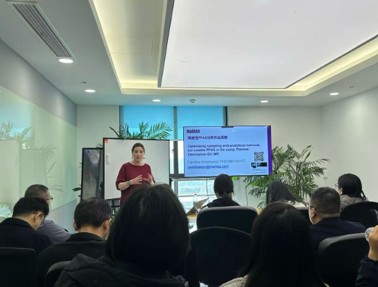
My involvement begins with the UK national committees through BSI, which feeds into global standardization work with CEN and ISO. We also collaborate with international organizations such as the ASTM.
Compliance with methods underpins data quality and comparability, with specified sampling and analytical practices. Standardisation provides a consistent framework for compliance, even as laboratories are required to apply these methods to increasingly complex monitoring challenges.
This blog introduces the new Markes Thermal Desorption Applications Guide: Environmental Air Monitoring, offering practical, standards-aligned TD–GC–MS workflows to help analysts, laboratory managers, and regulators tackle these evolving air monitoring demands with confidence.
Regulated compound classes in air monitoring
Within the guide we address monitoring of compound classes that form the basis of many regulatory programs. These typically focus on key classes of airborne compounds with known impacts on air quality and health:
- Halocarbons, due to their role as greenhouse gases and ozone-depleting substances
- Ozone precursors, including volatile hydrocarbons that contribute to ground-level ozone formation
- Air toxics, a broad group of hazardous volatile compounds harmful even at low concentrations
- Oxygenated volatile organic compounds (OVOCs), important in the formation of ozone and secondary organic aerosols
- Semi-volatile organic compounds (SVOCs), often associated with particulate matter and long-term health effects
Targeted and untargeted screening
While much of air monitoring focuses on compliance with standards, analysts increasingly need to identify what else is present. Untargeted TD–GC–MS screening enables the identification of unknown VOCs in complex air samples, which is critical in areas where contamination profiles are evolving or poorly understood. For example, investigating odour complaints near industrial facilities, characterizing emissions from manufacturing processes or materials, and monitoring indoor air quality in buildings.
The ability to combine targeted compliance monitoring with untargeted screening is becoming increasingly important as monitoring challenges evolve faster than regulatory lists.
In our guide we show how TD–GC–MS methods can be applied flexibly to support both routine compliance and the investigation of unexpected or emerging contaminants.
The case of PFAS detection in air
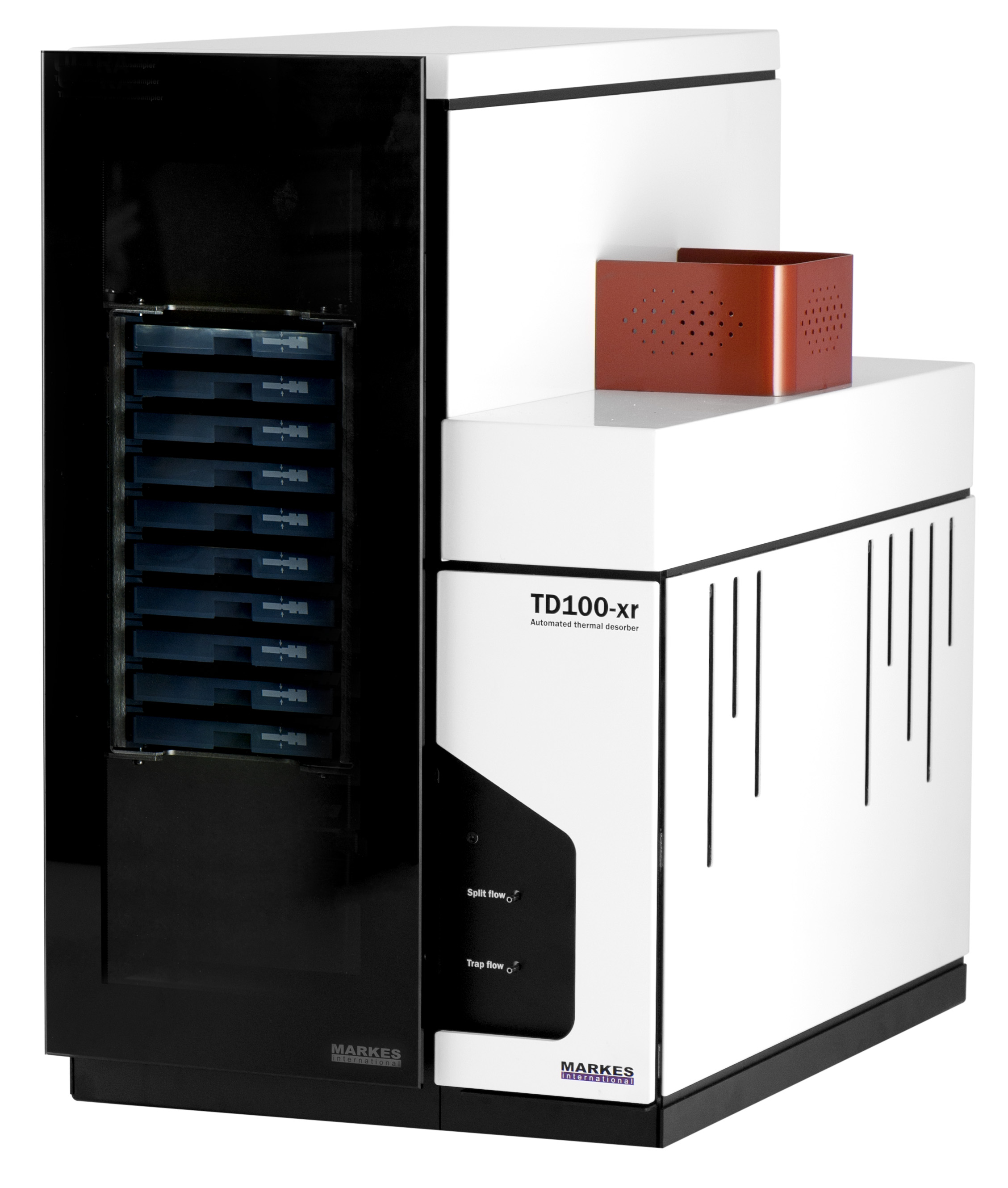
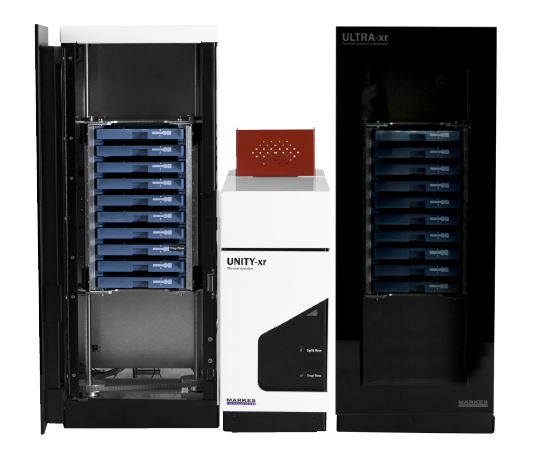
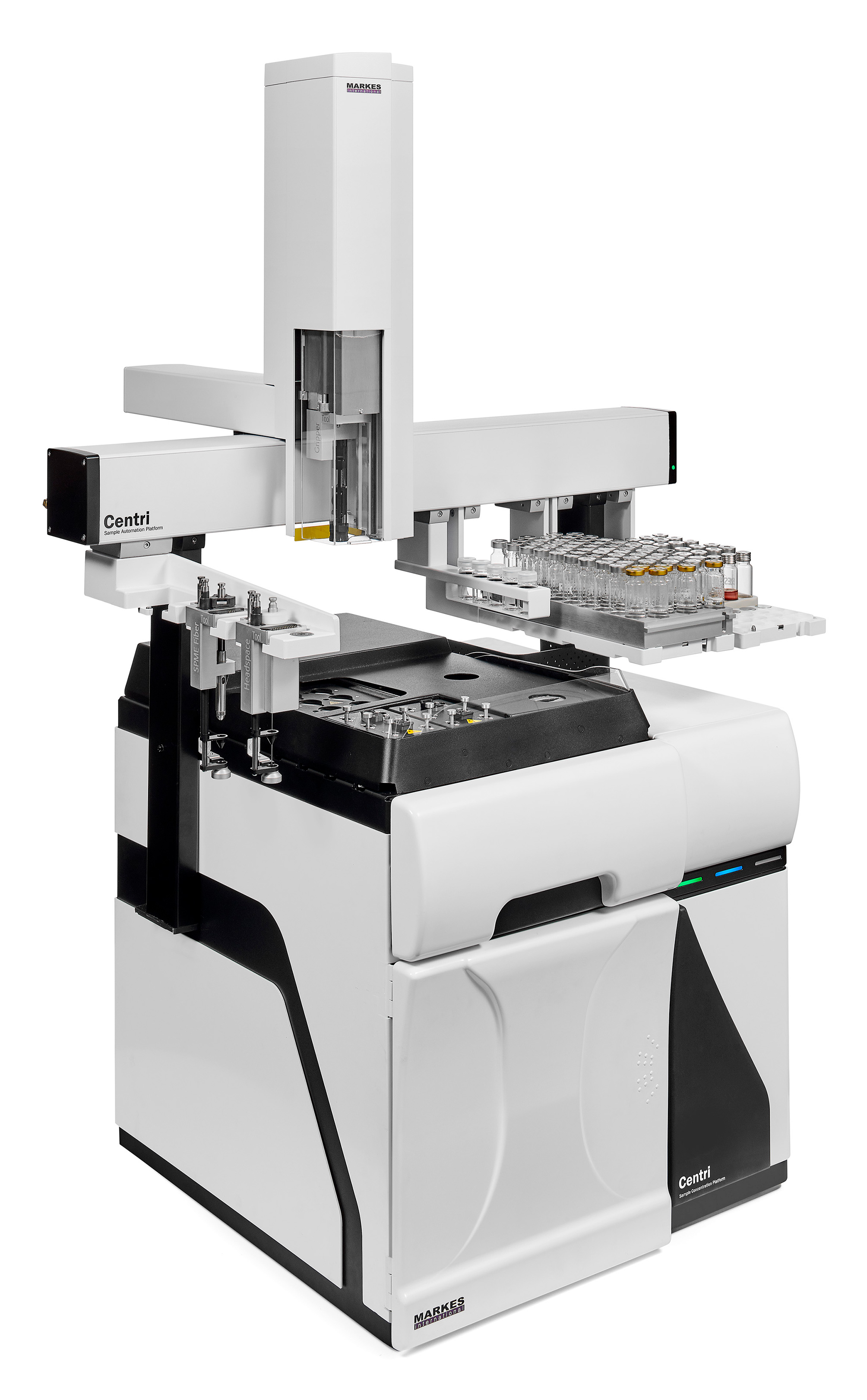
Let’s take PFAS detection in air as an example. Recently we have seen a development in harmonised methods for sampling and analysing PFAS in air. However, long before this laboratories were already being asked for answers. Customers wanted to know what sampling and sample introduction systems should be used, what compounds could be identifies, what detection limits were realistic, and how to manage background contamination and humidity. These conversations informed our research that now supports emerging guidance such as EPA OTM-50 for Stack Emission monitoring of destruction markers and ASTM D8591 for identification of specific fluorotelomer alcohols in indoor environments. Markes' TD–GC–MS systems support both analysis of known compounds and untargeted screening to identify unexpected VOCs, essential for understanding emerging contaminants where the profile is unknown.
Methods evolve to accommodate new contaminants and lower detection limits....laboratories are often required to move beyond target lists to address emerging risks.
Discover practical solutions in our new guide
Whether you're an analyst seeking reliable, step-by-step TD–GC–MS workflows, a laboratory manager looking to balance productivity with rigorous compliance, or a regulator contributing to evolving standards, this guide delivers actionable insights grounded in real-world experience.
The Thermal Desorption Applications Guide: Air Monitoring brings together global regulatory knowledge, proven methods for standards including US EPA TO-15A, TO-17, and ISO 16000-6, and practical strategies for tackling both established and emerging contaminants, designed to keep your monitoring program ahead of tomorrow's requirements.
Download the guide today and equip your team for the future of air quality monitoring.