Mastering PFAS analysis according to ASTM D8591: A validated workflow for trace-level FTOH analysis
3 March 2026

Laura Miles, Markes Application Manager recently led Markes’ validation work for the new ASTM D8591 standard test method for determination of fluorotelomer alcohols in test chamber air. This work contributed to a multi-laboratory study enabling the method to be validated, and was recently published in the Journal of Chromatography A.
We spoke with Laura about her experience...
How did you find participating in the ASTM D8591 validation?
Historically, PFAS analysis has relied on liquid chromatography–mass spectrometry, but the ASTM committee was building on a new method based on thermal desorption coupled with GC–MS/MS. I get asked a lot about analysing PFAS with TD, so I was keen to help validate the new standard method so there’s a reference for customers.
My role was to follow the procedure outlined in the standard and develop a method to obtain results that could be implemented reliably in routine analytical laboratories. As a thermal desorption specialist, my focus was on demonstrating that the instruments can deliver the sensitivity and reproducibility needed for trace-level analysis of volatile PFAS under real-world conditions.
A key advantage of this approach is the use of sorbent tubes for sample collection, which removes the need for solvent extraction and eliminates a major source of variability. Trace-level PFAS work demands careful control of background contamination through appropriate handling, consumables, and quality checks which was a challenge. However, the validation data at Markes showed that when you get these fundamentals right, a TD-based workflow comfortably meets the performance criteria defined by the standard.
My focus was on demonstrating that the instruments can deliver the sensitivity and reproducibility needed for trace-level analysis of volatile PFAS
How was this approach different to your normal way of working?
The validation of ASTM D8591 was a formal consensus standard involving multiple instrument suppliers and laboratories, so I had to demonstrate that our configuration could meet defined performance criteria across different laboratory environments - not just in our own setup.
The other major difference was the level of quality control. ASTM D8591 includes multiple QC checks that go beyond what I typically need to implement in other applications. As well as stringent calibration, sample recovery checks and monitoring of personnel and standard performance were also required to ensure data confidence at very low detection levels.
I've analysed PFAS in various applications before, but this was much more prescriptive and demonstrates progress in development of new standard methods in emerging contaminants. Everything had to be documented and validated to a new level which was a good challenge.
Did you need to perform any method development during the validation?
Yes, some method development and optimisation were required during validation. Although previous PFAS application work on a similar compound list provided a strong starting point, parameters needed refinement to meet the sensitivity and robustness requirements of ASTM D8591.
In thermal desorption (TD), method development focuses on optimising desorption temperature, desorption time, and gas flows throughout the method to ensure quantitative transfer of analytes without degradation or breakthrough. Split flows are particularly important: adjusting inlet and outlet split ratios allows control of analyte loading onto the GC column, preventing overload at higher calibration levels while maintaining sensitivity at trace concentrations, which was required with the calibration range in ASTM D8591.
Gas-phase internal standard addition via the internal standard accessory was also used to monitor instrument stability over sequences. This provided ongoing verification of system performance without interferences from external contamination.
Finally, to confirm method robustness, carryover was assessed by analysing a blank immediately after the highest calibration standard. No detectable carryover of the target compounds was observed, confirming the method was suitable for this application.
Do you have any tips and tricks you'd like to share?
My biggest takeaway from this work is contamination control. It sounds obvious, but with interferences present everywhere it’s key to isolate and remove these sources from the workflow. You need strict contamination control at every stage. I always use dedicated syringes and consumables for PFAS work, clearly separated from general laboratory equipment, to prevent low-level background issues that compromise calibration and QC performance.
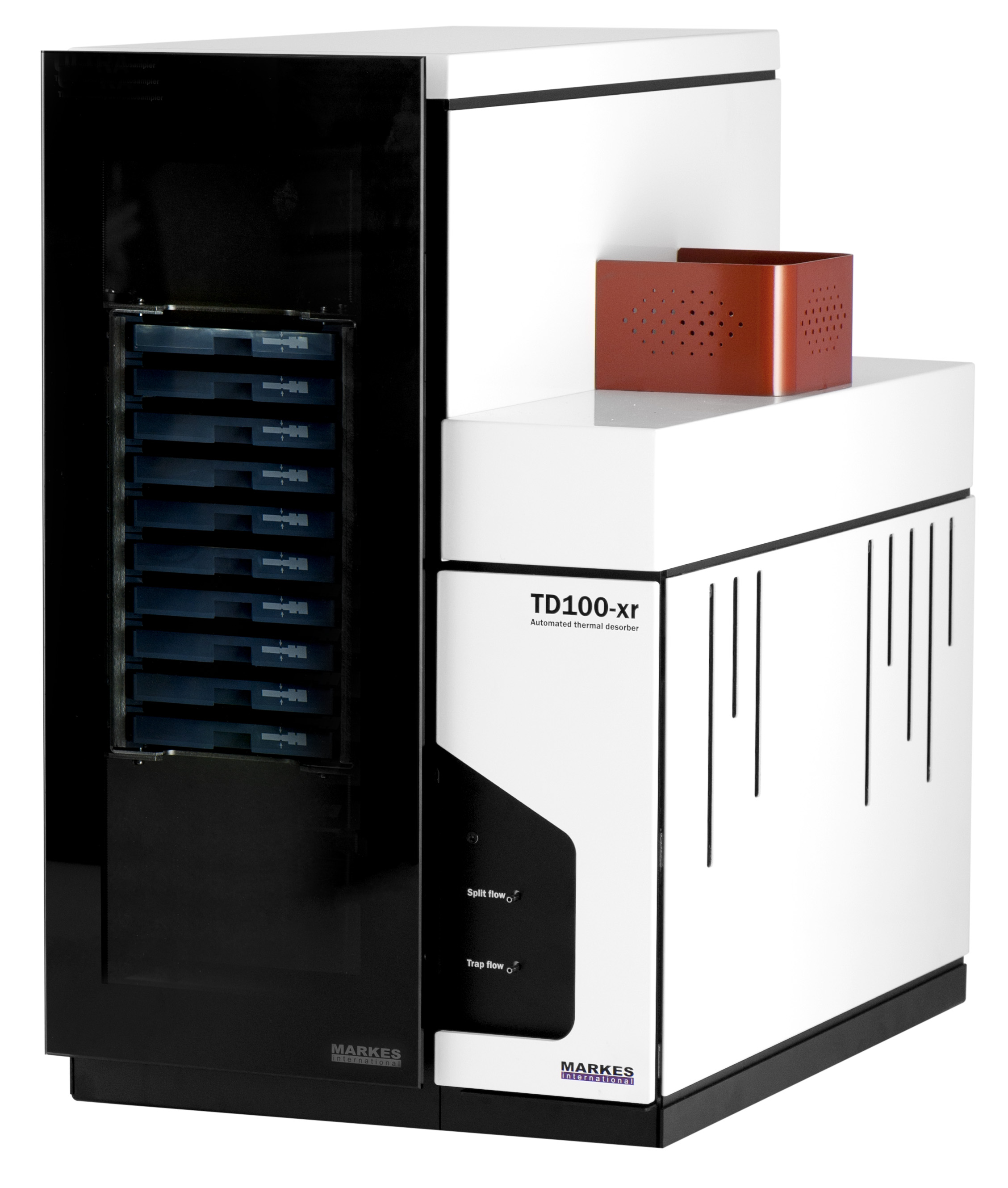
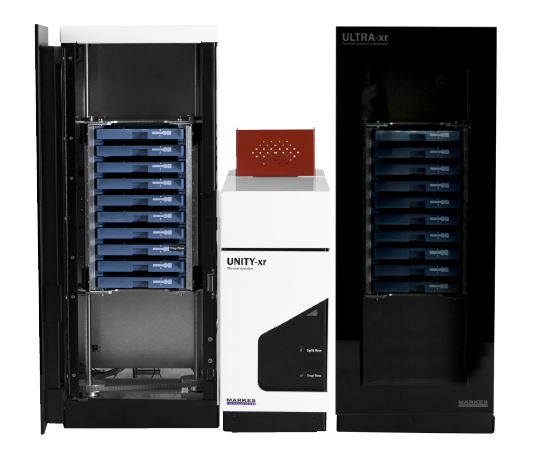
Efficient tube conditioning is critical, particularly when preparing large numbers of spiked tubes. The TC-20™ allows me to simultaneously purge multiple sorbent tubes, ensuring consistency and reducing preparation time but still maintaining a higher level of quality control. Automated thermal desorption systems such as the TD100-xr™ or UNITY–ULTRA-xr™ Pro enable long, unattended sequences, reducing manual handling and associated contamination risk. Given the complex QC sequences required by ASTM D8591, automation is vital for maintaining both data quality and laboratory efficiency.
Finally, clear, standardised operating procedures and PFAS-specific staff training make a measurable difference. ASTM D8591 is robust, but success depends on combining appropriate instrumentation with well-defined, disciplined laboratory practices.
Our validated workflow supports sampling volumes from 500 mL to 500 L, giving laboratories flexibility to address current materials testing needs and emerging regulatory requirements for indoor air quality assessment, occupational exposure monitoring, and ambient air analysis as PFAS regulations expand globally.
PFAS in air: Validating ASTM D8591 for the measurement of airborne fluorotelomer alcohols documents the complete, ASTM D8591-24–compliant workflow from the inter-laboratory validation study. It includes instrument parameters, method conditions, representative chromatograms, and validation data to support confident implementation in routine laboratories. Markes also provides training and technical support to help laboratories adopt the method efficiently and maintain ongoing compliance.