'Greener methods, smarter tools, deeper insight': Professor Elia Psillakis on modern sample preparation
12 February 2026
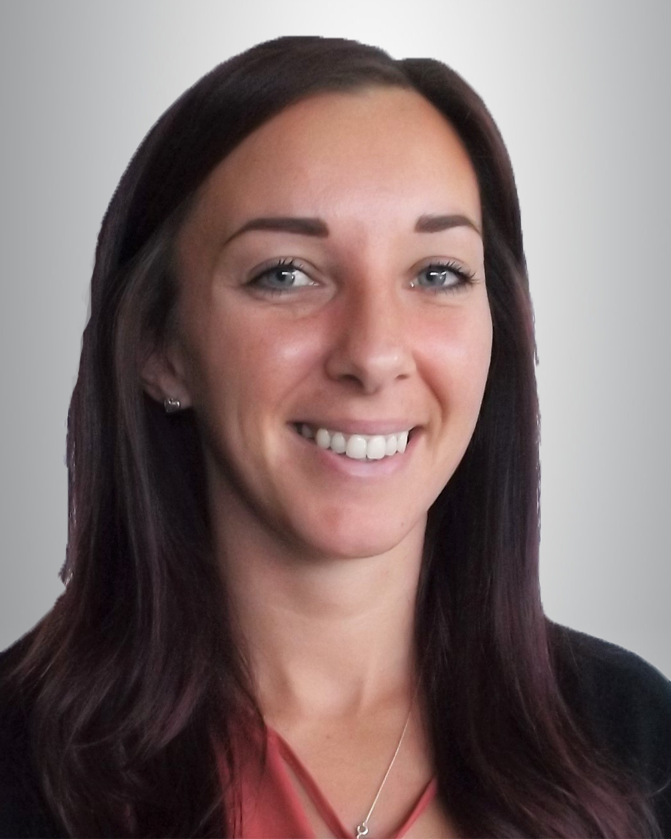
Markes' Rachael Szafnauer met up with Professor Elia Psillakis to discuss the latest advances in sample preparation
Rachael Szafnauer: Elia, many of our readers will know you from your recent webinar on sorptive extraction, but for those who don’t, please could you introduce yourself?
I am Elia Psillakis, a professor of water chemistry at the School of Chemical and Environmental Engineering at the Technical University of Crete. I work in sample preparation, particularly its fundamental principles. In recent years, I have focused on greenness and sustainability in analytical chemistry.
I believe that only state-of-the-art technologies and ways of analysing samples can help us find answers to all the questions we are asking in our lab.
Which application areas do you see adopting new technologies in sample preparation?
We have many new technologies in sample preparation; I don’t think it’s a question of specific application areas. All I can say is that I see much more focus on sample preparation in the near future. For anyone working in analytical chemistry nowadays, I think everyone wants to work greener, faster and smarter. [Elia goes into more detail on future trends in this panel discussion: A taste of the future]
Do you believe that existing methods can be adapted for a greener future?
You know, I think it's very difficult to adapt existing methods for solving current problems. Legacy methods are based on solutions we found several decades ago. They were based on the knowledge we had at that time, the tools we had at that time, and the problems we were facing at that time. Today, the situation is completely different. The problems we are facing are far more complex, and I believe that only state-of-the-art technologies and ways of analysing samples can help us find answers to all the questions we are asking in our lab.
One of the new technologies is vacuum-assisted extraction. Can you tell us more about it?
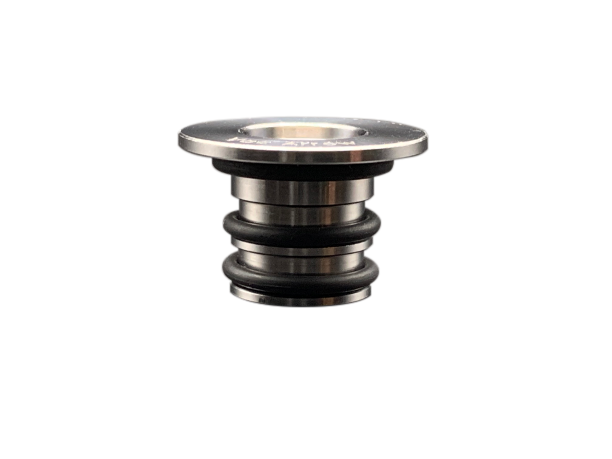
Vacuum is just another parameter to consider during headspace sampling. What you can achieve is, you accelerate the extraction of your analytes. So things go much, much faster. And for this reason, you don't have to spend too much time sampling your analytes.
Typically, for specific applications, temperature sampling times are halved. Another great benefit, especially for food analysis, is that you don't have to heat your samples because everything is accelerated. Everything goes on fast-forward, basically. You can actually use milder temperatures, and especially in the case of food analysis, you do not degrade your sample or create artifacts that can be the result of heating your samples. It's a step forward.
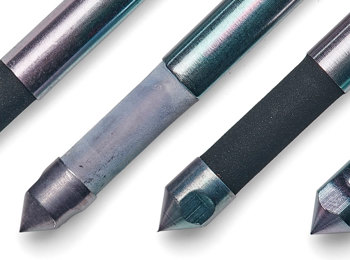
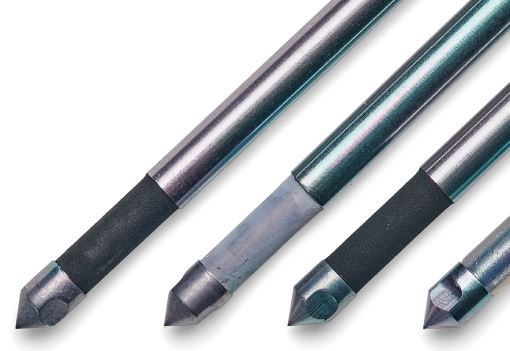
The way to expand in the future is to use the vacuum approach for different technologies that exist. So far, we have SPME fibers, we have SPME arrow, and we intend, very soon to expand it to many different microextraction techniques.
What would you say to help users adopt more modern techniques?
Well, the only barrier they may have is because of the standard methods. If they want to change into another technology, they will most certainly have to develop an in-house protocol, which I appreciate is not that easy to do.
However, we should as a community, try to make this change, because they will see that their new tools are more powerful. They will be able to exploit completely new aspects of their samples. And they can even achieve much greater sensitivity.
They will empower their analysis. I think there is a lot of support. It's not only academic that is there to support, but also companies are willing to help users to change their methods. The problem is more the willingness of routine labs to change the methods they use.
We evaluated the greenness of 174 ISO and CEN official standard methods in a recent paper and close to 70% of these methods got a score below 0.2 [on the AGREEprep scale, where 1 represents the highest possible score for greenness]. This is a very good argument to convince analysts that they have to change to improve not only the way they analyse samples, but also to minimise their environmental footprint.
Legacy methods are based on solutions we found several decades ago... today, the situation is completely different: everyone wants to work greener, faster and smarter.
What is the role of automation in sample preparation?
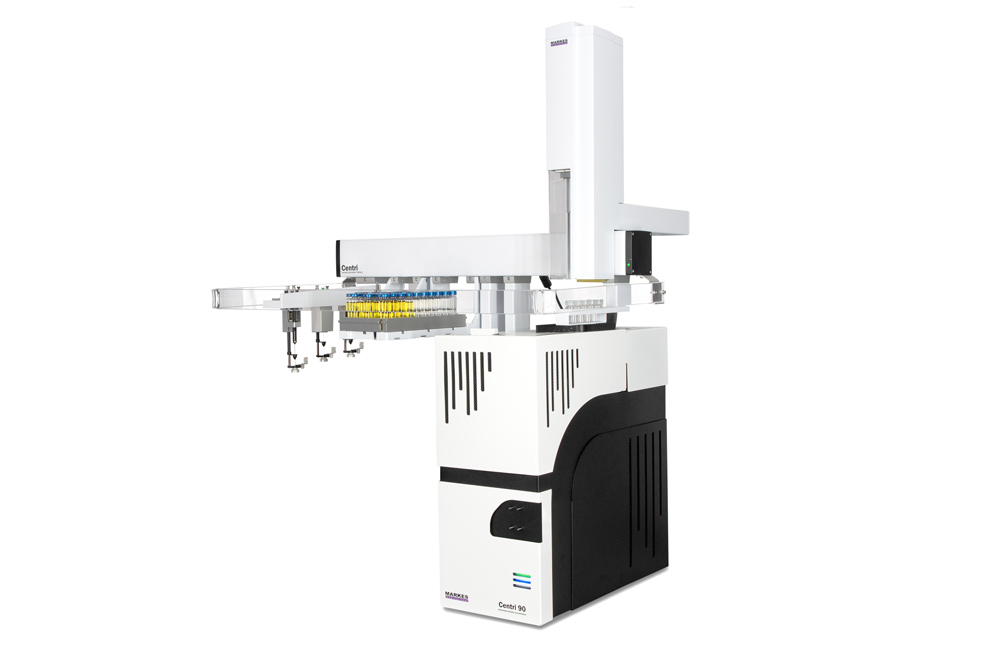
Automation is actually one of the criteria of the concept of green sample preparation. So, automation and unattended operation should be part of our efforts towards greener analysis and sample preparation. It’s all about working greener, faster and smarter.
With the increase in sample information using modern techniques, what are your strategies to better understand this data?
This is a very important question. The answer to this is that there is only one strategy if you want to understand your data. And this is fundamental. You cannot treat sample preparation as a black box. Sample preparation relies on phenomena. Many of them are quite complicated, but you need to have a minimum level of understanding of what you're doing in the lab if you want to explain your data. So going back to basics is very important for every analyst.
Please tell us about your working relationship with Markes
I've been working with Markes for the past eight years. It has been a fruitful and productive collaboration which I have very much enjoyed. Initially when we started working on prototypes (for vacuum-assisted SPME), I was very impressed by the company’s solid engineering background. I found the R&D department incredibly efficient, filled with people who are creative and enthusiastic about new ideas.
I collaborate with Markes through my company, ExtraTech Analytical Solutions, which is a university spin-off. What is impressive is that Markes chose to collaborate with a small spin-off like mine, all the way through to launching a product.
In analytical chemistry, collaboration between stakeholders is usually very limited. Markes clearly supports innovation, which is an important factor in achieving sustainability in analytical chemistry. It is also one of the few companies I know that actively supports innovation from academia. Markes also stands out because of the speed of its decision-making process. I found it easy to reach different specialists within the company and quickly get the information I needed. This is extremely important when you’re trying to launch a new product.
Any final thoughts for us?
All these new methods - the latest advances in sample preparation - are a step forward. We are improving the way we are extracting analytes and exploring completely new aspects of our samples. Each one is extremely important. Now, something to say here is there is no single sample preparation approach that is perfect for all types of analysis, but at least with such a large variety of tools we have, we can actually choose the right tool for the job.
Questions for Professor Psillakis
If you have any further questions for Elia or would like to find out more about vacuum-assisted extraction please contact Rachael Szafnauer.